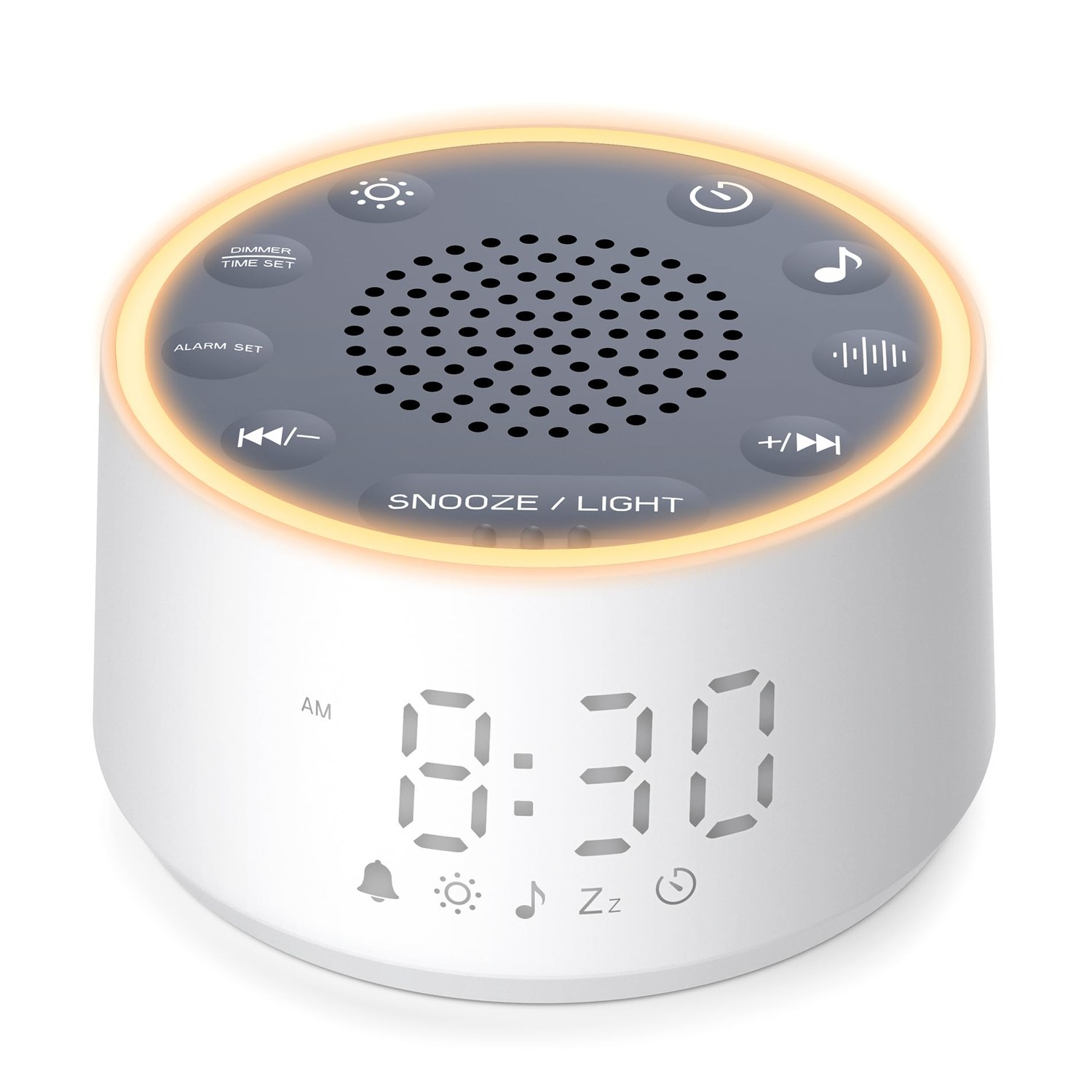
The complete guide
Using a sound machine as a child's first alarm clock
Somewhere between a baby's nursery and a teenager's bedroom, most children need a first alarm clock, and a combined sound machine like the D1 Nova is a genuinely practical way to introduce one.
Why a gentle alarm matters for a child's first clock
A standard alarm clock buzzer is jarring for anyone, and for a young child still getting used to the idea of waking up on a schedule, it can turn mornings into a fight before the day has even started. Seven gentle tones on the D1 Nova are specifically chosen to wake without startling, which makes the transition from "a parent wakes me up" to "my clock wakes me up" considerably smoother.
Keep the sound machine function running through the transition
Just because a child is old enough for an alarm doesn't mean they've outgrown white noise or a bedtime sound. The D1 Nova is built so both functions run independently, the same 25 sounds that help at bedtime keep working exactly as before, while the alarm handles the morning separately. There's no need to choose between the two.
Start with the light before relying on the sound
For very early risers or a child anxious about waking up on time, the night light's dimmable display can double as a visual cue, some families set a colour change or a specific brightness pattern as a "not time to get up yet" signal, before introducing the sound-based alarm as the actual wake-up trigger. It's a gentler way to build the habit than a hard alarm from day one.
When to make the switch from parent-led to clock-led mornings
There's no fixed age for this, it depends more on whether a child already understands what a clock reading means and can respond to a gentle sound without needing you in the room. A period of the alarm running alongside your normal wake-up routine, rather than replacing it immediately, tends to work better than switching over in one go.